6 Budget Setting Techniques – Explained

Introduction

The key to effective budgetary control is the budget setting process. Budgets should accurately reflect the service being provided and there are a number of budget setting techniques that can be applied to both expenditure and income budgets. They can be used independently or combined depending on the type of budget being set. The crucial techniques include:

  1. Incremental Budgeting
  2. Zero Based Budgeting
  3. Cash Limited Budgeting
  4. Resource Restricted Budgeting
  5. Activity Based Budgeting
  6. Contingency Budgeting         

Incremental Budgeting

This technique relies on using an historic base as a starting point for budget setting. This is often the budget or the actual figures for the previous year, or some combination of the two. The base is then used to formulate the budget for the following year by taking each budget heading and either adding or subtracting an inflation factor from the base figures and adjusting for other known factors such as savings or approved growth.

Advantages

  • Simple
  • Quick
  • Accurate, if little change in activity

Dis-Advantages

  • Historic
  • No account taken of necessary future changes
  • Assumes the base is accurate
  • Compounds historic errors

Incremental budgeting is best used for certain items of expenditure which are unlikely to change from year to year. For example, when staffing remains constant, salaries can be budgeted for incrementally where the increment reflects the pay award, or in the case of fixed price contracts there may be an agreed annual inflation rate.

Zero Based Budgeting

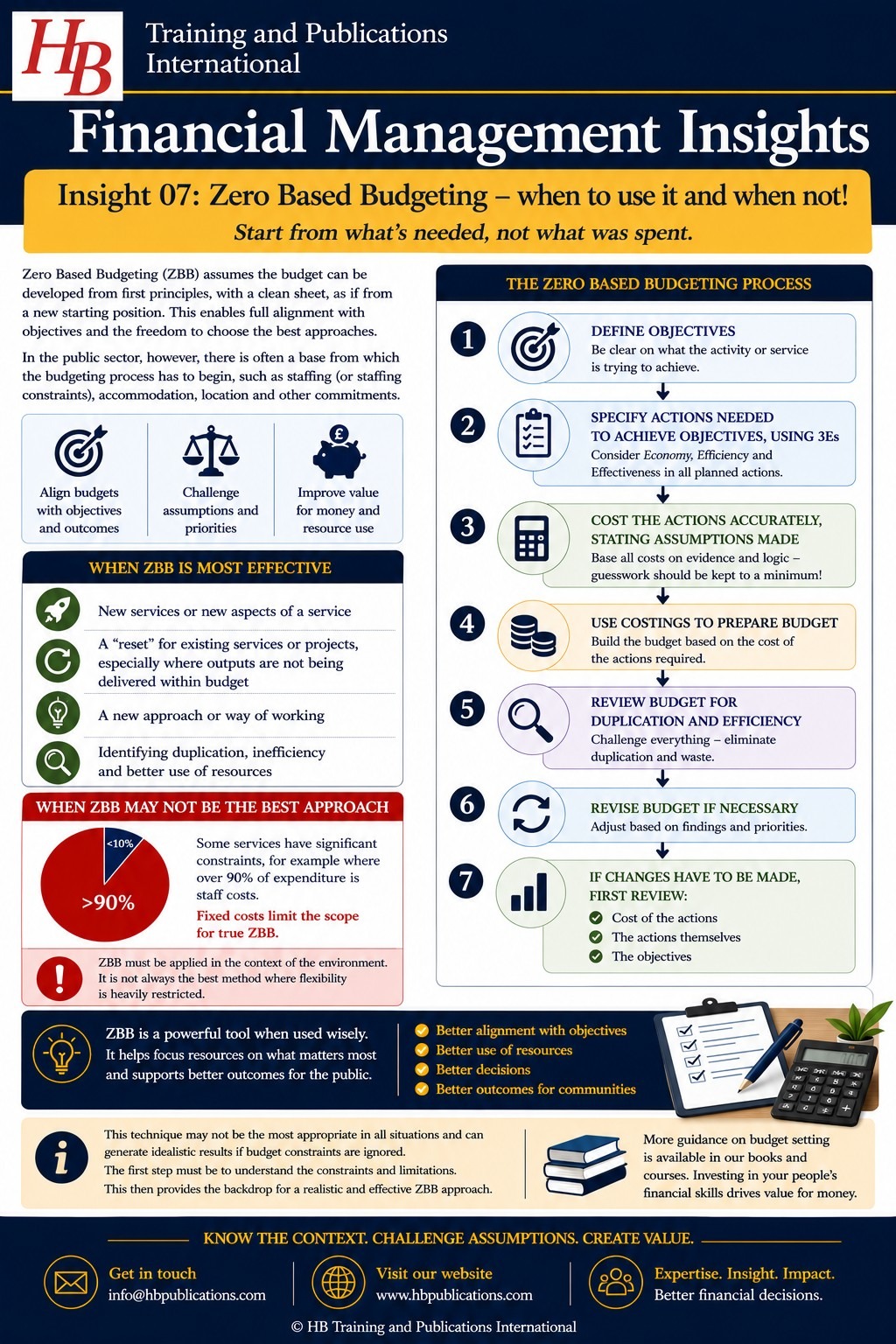
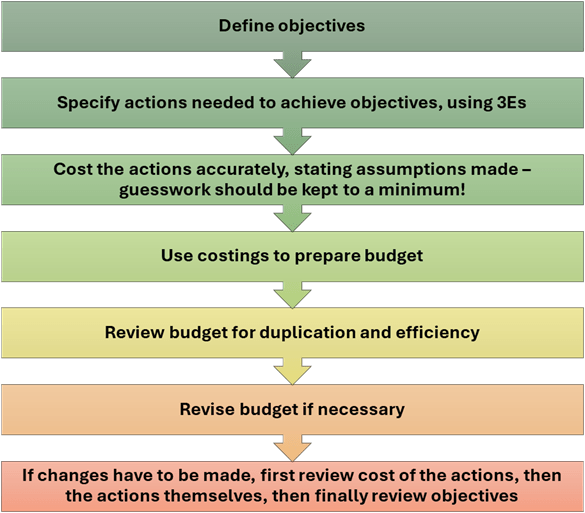
This approach to budget setting is most strongly recommended as it is linked to the business planning process. The zero based budget assumes that all budgets are derived from first principles and that the organisation can start with a blank piece of paper; a zero base. They are based on the objectives to be achieved for the period without necessarily referring to the past.

Advantages

  • Pro-active and forward looking
  • Realistic and accurate
  • Links into business plans

Dis-Advantages

  • Time consuming
  • Requires clear objectives
  • Many organisations cannot begin with a zero base as they have committed expenditure on existing staff, buildings and contracts, which they are obliged to continue, at least in the short term.

It is generally considered the advantages of zero based budgeting outweigh the dis-advantages. Where possible, zero based principles should be adopted, even when in most instances an organisation will not have a totally zero base to begin with. 

Cash Limited Budgeting

This technique is appropriate when the service area is given a set limit on its total net expenditure. The service manager then has to determine what can be delivered within this cash limit and create a budget accordingly. This technique can prove difficult if the service objectives give targets on output without reference to the practicality of meeting those targets within a cash limit. The approach to be used in the case of cash limited budgets is to identify the costs that are fixed, i.e. those that cannot be reduced, and then to spread the balance of the budget across those items which are variable and have an element of flexibility.

Advantages

  • Clear parameters on expenditure
  • Quick – negotiation limited
  • Incentive to make savings to bring expenditure in line with cash limit

Dis-Advantages

  • Services may have to decrease quality or quantity (or both) in order to stay within the cash limit
  • Not necessarily linked to business objectives which may include a need for change or development
  • Assumes there is sufficient flexibility in the budget to operate within an overall cash limit
  • Inflexible – not practical for demand led/statutory services

Resource Restricted Budgeting

This type of budgeting occurs when resources to be utilised by the service are restricted. Resource restriction will typically relate to:

  • Staff
  • Equipment
  • Property
  • Finance
  • (the cash limited budget is a form of resource restricted budget)

There are often many reasons why resources need to be restricted. For example, it may be necessary for the benefit of the whole organisation to restrict staff numbers. This action may be required because recruiting an additional full time member of staff represents an on-going future commitment which the organisation may not be able to sustain. Hence, restricting the staffing resource is a common budget setting approach.

Advantages

  • Clear parameters on expenditure
  • Quick – negotiation limited
  • Organisation maintains strong control over its resources

Dis-Advantages

  • No consideration of the practical impact of restricting resources and the effect on services
  • Not linked to business objectives which may include a need for change or development
  • Inflexible – not practical for demand led/statutory services

Activity Based Budgeting

The organisation using this approach sets budgets based on the cost of providing each area of activity. If the budget has to be reduced, each activity should be examined, and decisions made as to which should cease or reduce accordingly. This method of budgeting is only possible if there are clear divisions between each activity, and where resources can be separately allocated. Where resources are shared (such as staff, premises, etc.) the scope for activity based budgeting is more difficult. It then relies on accurate resource allocation methods, such as time charging by staff, allocating square footage, and utility usage, etc. to individual activities. 

Advantages

  • Resources clearly matched to service provision
  • Forms a base for unit costing
  • Highlights which are the most expensive activities

Dis-Advantages

  • Resource allocation may not be accurate
  • Can be complex to calculate as detailed work needs to be undertaken to isolate each activity and the resources consumed
  • Not practical for services where a flexible approach needs to be taken and where resources need to be moved between activities in response to demand

Contingency Budgeting

This budgeting technique is sometimes seen as “a broad brush” approach. Limited effort is used to establish detailed estimates for each of the budget headings as a contingency amount is provided to take account of poor estimates, changes in demand, and insufficient resources. The contingency may be used flexibly across any of the budget headings. The level of the contingency will depend on an estimation of the risk of error within the budget. If it is considered that the budget has been calculated to an accuracy level of 80%, then a 20% contingency may be added to the budget.

Advantages

  • Quick
  • Easy
  • Flexible

Dis-Advantages

  • Inaccurate; open to guess work
  • Insufficient thought given to linking service with finance
  • Will be difficult to monitor

What Next?

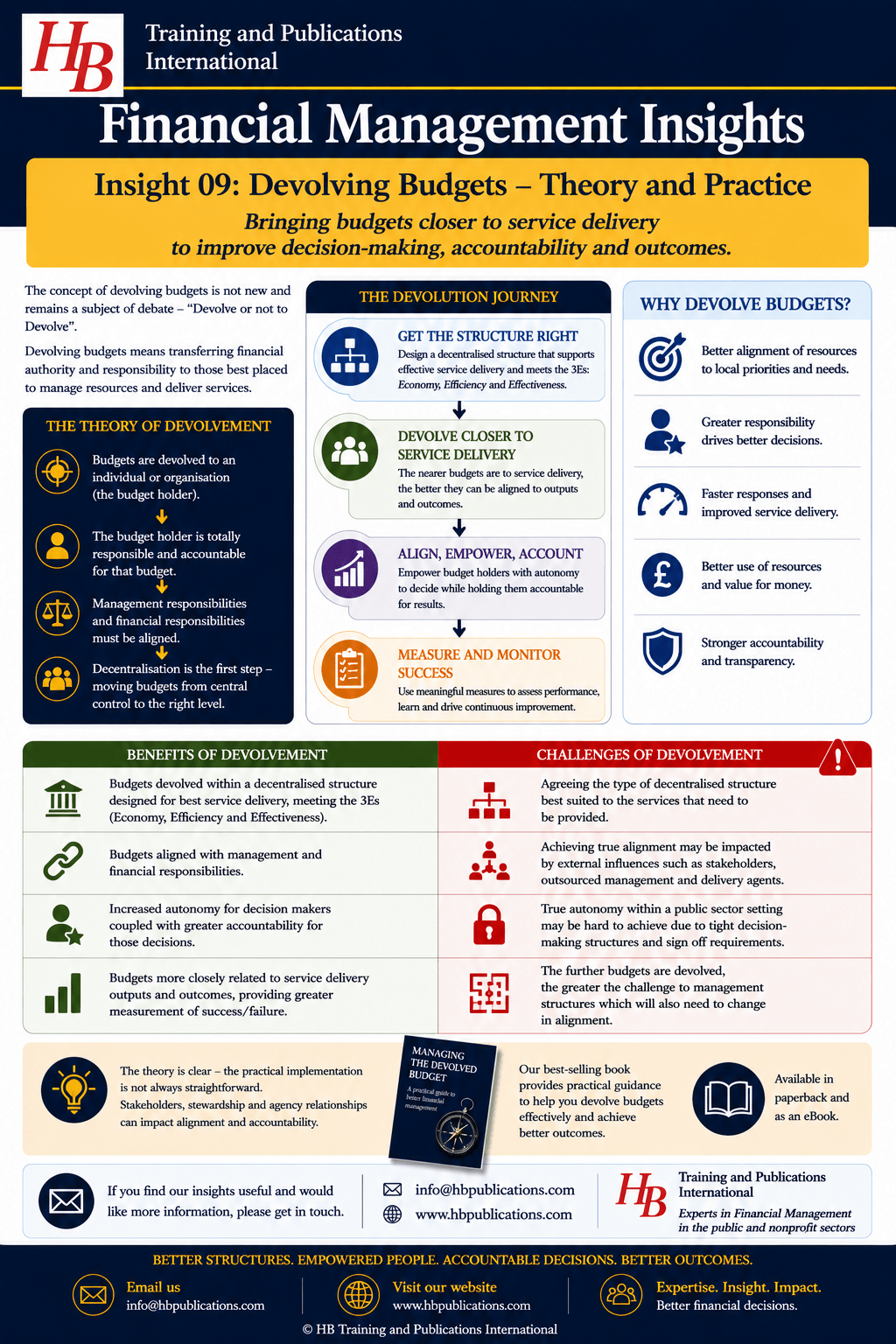
One of the keys to budget setting is to understand the budget drivers of the service or activity being undertaken. These are the input elements that drive the expenditure or income, and hence the budget. Understanding budget drivers enables budget holders to begin the creative thinking and implement control.

Using the correct budget setting techniques is crucial for setting realistic budgets. Learn more about the above with illustrated examples by reading our book, “Managing the Devolved Budget”.

WHAT BUDGET HOLDERS NEED TO KNOW

Effective financial management, budgeting and control should underpin the operations of all public sector and nonprofit organisations. The reason being that they are responsible for public funds, and need to ensure value for money.

In the current environment public sector budgets are being challenged to deliver more for less. This requires all those tasked with spending public funds to take ownership of their budgets and be accountable for their use. Many budget holders are skilled professionals in specific disciplines but may not have any knowledge or experience in being responsible for a budget. This increases the challenges faced in ensuring public funds are managed and controlled.

Often training and development budgets face constraints which result in only “essential” training being funded and delivered. We consider that finance training should be in that category, but often it is not. There are many areas that we consider that anyone responsible for a budget at any level should be fully conversant with and form part of their underpinning knowledge.

What Budget Holders Should knowKnowledge requirement
How to set a budgetUnderstanding budget drivers; costing and pricing; budget setting techniques such as incremental and zero based budgeting; organisational financial regulations such as authorisation levels and procurement rules; the budget setting timetable; etc.
How to monitor a budgetUndertaking variance analysis, projecting outturns, using service data to monitor costs (productivity) as well as budgets, understanding budget profiles, accessing financial reports, etc.
How to control a budget (budget management)Taking action to correct variances; applying cash limits; using virements; using exception reporting; analysing service data; checking commitment levels; calculating value for money; matching budgets to output objectives; reforecasting; updating outturns to monitor impact; etc.
How to read and understand financial reportsDepending on the role, budget monitoring reports; financial accounts; expenditure reports; income reports; service provider contracts; etc.
How to work with finance teamsUnderstanding financial terminology; financial timetables for reporting; key financial assumptions for budget setting; designing financial reports to assist monitoring and control; making journal adjustments and virements; year-end accruals; etc.

Although we refer to budget holders, we consider that anyone who has a role in spending money or raising money should have this knowledge, regardless of job title.

Our experience is that some staff are promoted to senior management positions without having this underpinning knowledge. Having not addressed the knowledge gap, earlier in their career, it becomes difficult to raise the issue as a learning need. This sometimes leads to an over-reliance on finance departments who cannot manage budgets without service input.

Learning Management Systems (LMS) offer a great opportunity to provide effective e-learning courses covering these areas. We offer a range of SCORM 1.2 compliant courses with standard modules which can be customised on request. These can be integrated with an inhouse LMS allowing access to all relevant staff. We have more information available in our 5 minute video on this link https://www.youtube.com/watch?v=EJtpp3cq2zY

Practical Budgeting & Financial Management Training

Are your managers under pressure to deliver services while also controlling budgets, forecasting spend, and explaining variances—without being finance specialists?

Across local government, the NHS, housing, charities, and public bodies, financial pressures are intensifying. Rising costs, tighter funding, and increased scrutiny mean there is less room for error than ever. Yet in many organisations, budget responsibility sits with non-finance managers who have had little or no formal financial training.

That’s where HB Training & Publications International can help.

We are now taking bookings for our half-day virtual training courses designed specifically for budget holders, service managers, and non-finance leaders who need practical, usable financial skills—fast.

What Your Team Will Gain

Our training focuses on real-world challenges and delivers immediate impact. Participants will learn how to:

  • Understand budgets and financial reports with confidence
  • Improve in-year budget monitoring and forecasting
  • Identify and manage risks earlier
  • Explain variances clearly to finance teams and senior management
  • Strengthen budget ownership and financial accountability
  • Make better decisions using financial information

This is jargon-free, practical training based on real public and non-profit sector experience—not generic private-sector theory.

Proven, High-Impact Training

Participants consistently rate our courses highly:

“The content was brilliant – clear, practical and easy to follow.”
“The exercises really helped bring the learning to life.”
“The length of the course was ideal – focused and not overwhelming.”
“Professional, knowledgeable and engaging throughout.”

Flexible, Easy-to-Book Format

Our half-day virtual courses are designed to fit around busy workloads, making it easy to upskill teams without taking them away from service delivery for long periods. Courses can be booked for individuals or tailored for teams and organisations.

Want Ongoing Support, Not Just Training?

Alongside our courses, we also offer our Budget on Track service—providing practical, ongoing support to budget holders throughout the financial year. This helps organisations move from reactive firefighting to proactive financial management, with stronger forecasting, earlier intervention, and better financial conversations across the organisation.

Book Now or Enquire Today

If your organisation wants to:

  • Improve budget control
  • Reduce the risk of overspends
  • Build financial confidence among non-finance managers
  • Strengthen in-year financial management and governance

Now is the time to act. For dates:

🌐 Visit: https://hbpublications.com/services/budgeting-courses-and-finance-training/

Places are limited, and dates fill quickly—get in touch today to secure your place or discuss a tailored programme for your team.

📩 Contact us: info@hbpublications.com

Key Financial Management Challenges

img 1 1

Many public sector and nonprofit organisations continue to face key financial management challenges.

Tight budgets, rising service demands, and greater scrutiny mean finance teams and budget holders must work more efficiently and confidently than ever. Below are some of the most common challenges we see across the sector:

IssueDescription
Overspend RiskBudget pressures often arise from limited forecasting skills, delayed financial information, or lack of confidence among budget holders.
Weak Internal ControlsInconsistent processes and unclear responsibilities increase the risk of errors, non‑compliance, and governance concerns.
Audit FindingsRecurring audit issues highlight deeper gaps in skills or processes, particularly around documentation, controls, and financial accuracy.
Poor Budget MonitoringMany managers struggle to interpret financial reports, leading to reactive decisions and late identification of variances.
Grant Reporting IssuesManaging restricted funds and meeting funder requirements can be complex, especially when multiple grants are involved.
Skills Gaps in Finance TeamsBoth finance and non‑finance staff often need support to build confidence in budgeting, financial management, and internal controls.

These challenges are widespread, but they are also highly manageable with the right training, tools, and support.


Next Steps…..

At HB Training and Publications, we specialise in helping public sector and nonprofit organisations strengthen financial management through practical finance training, assessments, and support services such as our unique Budget on Track. Whether you need to improve budgeting, reduce audit findings, enhance internal controls, or upskill your team, we can help.

Get in touch today to discuss how we can support your organisation’s financial awareness, skills and development. Just email us at info@hbpublications.com and we will be happy to have a no obligation chat.

Budget on Track

Keep budgets under control and meet financial targets

Budget on Track is our service to support budget holders, managers, and financial decision makers in the public and non-profit sector. If controlling budgets is important for your organisation, it requires all budget holders at every level to meet their targets, whether that be savings, or just not overspending. Sometimes they will need help.

Budget on track is more flexible than a training course, but more cost effective than a personal consultant. It provides bespoke answers to questions when they are needed. Subscribers to Budget on Track are able to email their personal budget mentor (PBM), who is there to support them.

It can be any kind of budget, revenue or capital or income. Our subscribers can ask simple or more difficult questions and receive some assistance. It may be help with financial planning, budget setting, variance analysis, budgetary control, more for less, statistical analysis, management reports, or something else.

We are experts in delivering financial training courses, but often participants have to wait to take  up a place, and would like to focus on specific issues. Budget on Track PBMs are all accountants with experience, and are available online. A session can be booked by email; and delivered by email or MS Teams at a time/date to suit the subscriber.

Budget on Track is a tool to be used to support individuals and organisations at a time when public sector and non profit organisations face increasing challenges. It can help budget holders with savings, and financial decisions. Most importantly, Budget on Track is great value for money.

Service package

Up to 4 hours of support per month – allocated to meet the subscriber’s needs

Communication via email or MSTeams

Response usually within 48 hours

Bespoke responses given

Confidential and adhering to UK GDPR

All BoT budget mentors are qualified accountants

From £99 per person per month excluding VAT (subject to package choice)

FAQs from subscribers

I can’t understand my budget monitoring reports – Help!

What do these variances mean, and what can I do about them?

How can I make the savings targets work without reducing services?

How do I calculate projected outturns?

I need to produce a zero based budget for my service – not sure where to start.

My budget has not been broken down, how should I allocate expenditure?

My budget consists mainly of salaries so I cannot manage it, what can I do to make savings?

How can I reduce spending on agency staff?

What actions can I take to control the budgets?

The 5 Step Budgetary Control Process

budget v actual computer

The 5 Step Budgetary Control Process

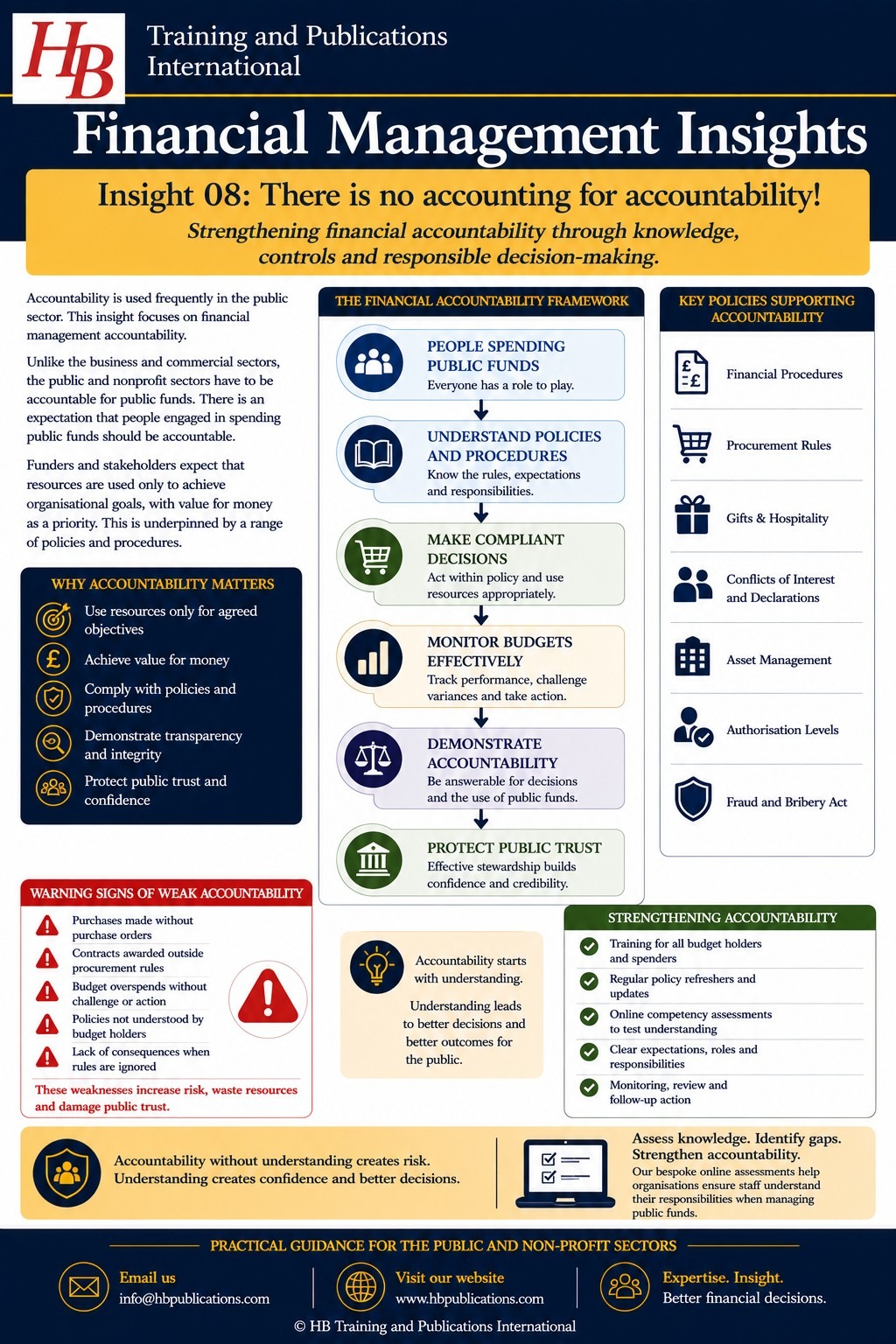
To ensure effective budgetary control, budgets must be effectively monitored and managed. Although the difference between monitoring and managing budgets is not clearly defined, there are certain characteristics that set them apart.

The two can be broadly distinguished as follows:

Monitoring budgets Managing budgets
Checking accuracy of actual income and expenditure reported; comparing “actuals” with budgets; calculating variances; identifying trends; highlighting any variations to the budget owner Taking the necessary action, based on the monitoring results, to ensure the budget remains within control.

The budgetary control process ensures funds are being utilised in accordance with the required level and quality of output from the allocated resources.

The process of controlling budgets can be broken down into several steps:

  • Establishing actual position
  • Comparing actual with budget
  • Calculating variances
  • Establishing reasons for variances
  • Taking action to exert control


Step 1 – Establish Actual Position

All organisations have some form of an accounting system which records their income and expenditure. Depending on the system, budgets will be identified by some form of budget code. Income and expenditure is then recorded against the budget code. This enables budget holders to identify their actual budget position at any point in time.

This information is normally provided in the financial management report. The style and content of the report will vary from one organisation to another and will be dependent on the financial system used.

To establish the actual position, the budget holder will need to examine and understand the financial information available. They will need to know how current the information is and adjust it for any outstanding transactions. These may include debtors and creditors. The budget holder will also need to know if any part of their budget has been “committed” – i.e. if goods and services have been ordered but not yet received.

Therefore, depending on the organisation, establishing the actual position may require information from several different sources.

Step 2 – Compare Actual with Budget

After completing Step 1, the information gathered needs be compared to the budgeted figures set at the beginning of the financial year. This comparison should be simple if the actual income and expenditure headings match those that were originally set.

The difference between the actual income and expenditure and the budgeted income and expenditure is called a “variance”. Variance analysis is an important technique in the budgetary control process.

Variance analysis is discussed in detail in some of our other resources, such as our book “Managing the Devolved Budget”. We also have a very good online course on our website called “Budgeting for the Public and Non Profit Sector” which explains variances clearly.

Step 3 – Calculating Variances

In the context of budgetary control, the term variance refers to the difference between actual and budget (planned) income and expenditure. An example of a variance is shown as follows:

Month 6
Budget heading Budget to date

(Expected spend)

Actual to date

(Actual spend)

Variance

+/(-)

Salaries

£120,000

£132,000

(£12,000)

The above example shows that by month six the budgeted expenditure on salaries was set at £120,000. However, the actual spending on salaries in those six months totalled £132,000. The difference between these two figures is £12,000. This represents the variance from the budget. In this case the variance is negative. The brackets represent over spending.

The “budget to date” column shows the amount of budget that should have been spent by month 6. Ideally, the budget would be “profiled” to reflect the pattern of expenditure over the year. Therefore, when the actual expenditure for that period is compared with the budget, the true variance can be calculated.

There are other variance calculations methods that can be used in assisting the budget holder to control the budget. As mentioned in Step 2, we have other resources that discuss this topic in further detail.

Step 4 – Establish Reasons for Variances

There are several reasons that can account for differences found between the budgeted and actual expenditure. The reasons for all variances needs to be identified. This process is critical to effective budgetary control, as the budget holder needs to know when it is appropriate to take corrective action. Variances can be both positive and negative, reflecting excess spending or under spending, or over/under performance on income. All require investigation.

The reasons for variances may include:

Error Incorrect figures entered on the accounting system
Delays Delays in entering information on the accounting system
Profiling Often incorrect budget profiles are entered, which bear no relevance to the pattern of actual expenditure and income (e.g. no account taken of seasonal fluctuations)
Poor budgeting Little consideration given to initial budget preparation
Unplanned changes For example, increases and decreases in demand for services, or introduction of new legislation


Step 5 – Take Action

Budgets can only be controlled if corrective action is taken in response to the variances. Sometimes the explanation for the variance results in no action being required. For example, timing differences. This is where the variance will diminish over time as the actual income and expenditure figures  naturally match up with the budget. Variances that arise because of fundamental changes, such as an increase in demand for a service, require action. This is necessary to regain budgetary control.

Examples of the type of action that can be implemented are given below:

  • Reduce or halt expenditure in areas where expenditure is controllable
  • Increase income
  • Make virements (moving money from one budget to another)
  • Use contingency funds
  • Delay activities
  • Redefine objectives
  • Redefine eligibility criteria
  • Change the nature of the service and how it is delivered
  • Cease or reduce services

What Next?

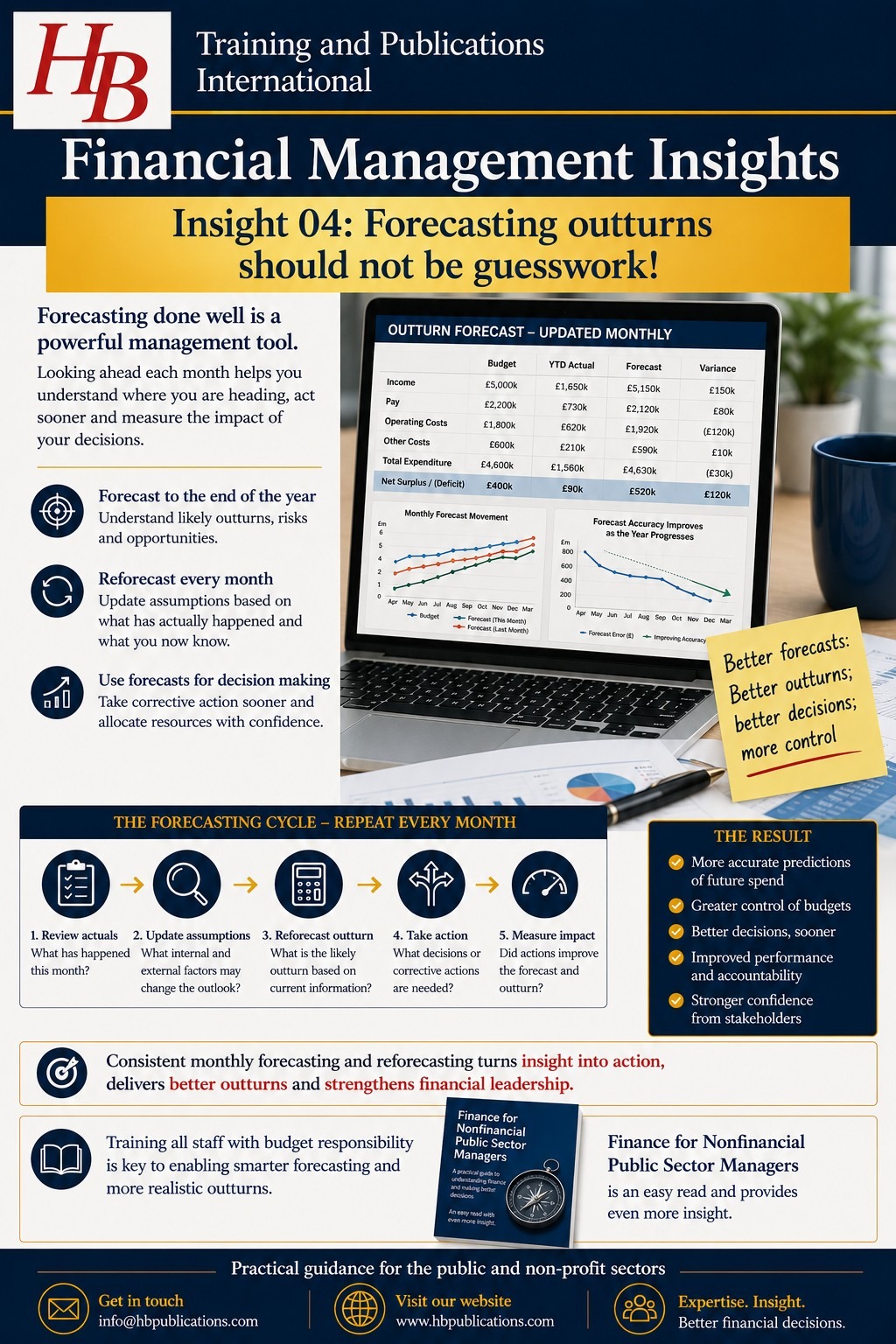
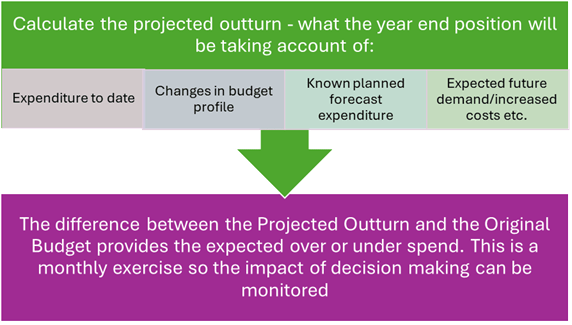
To effectively control the budget, it is necessary to remain focused on the future position. The calculation of the “outturn” becomes an important process as it reflects the projected financial position at the end of the financial year.

The projected outturn should be calculated on a consistent basis. This is because assumptions about changes to the budgeted income and expenditure during the year can change. It should also consider trends, known events, fixed/uncontrollable expenditure, budget profiles, supply and demand.

Learn more about how to monitor and manage budgets by reading our books; attending one of our courses virtual or online; or subscribing to our new support service “Budget on Track“. For further details visit our website www.hbpublications.com

Financial Management and Budgeting for the Public Sector

osoyoos spirit ridge meeting 04 e1506374814255

Half Day Online Live Course

This financial management and budgeting course is aimed at managers and those working in the public and non-profit sectors.  Whilst they may be non-financial professionals they would benefit from an understanding of finance. This programme covers financial terminology; the key financial statements; the income and expenditure account and the balance sheet. Public and non-profit sector organisations have to ensure they are viable, and the principles of accounting assist managers understand their organisation’s financial position. It covers budgeting, budget monitoring and budgetary control to enable participants to develop budgets that are meaningful and deliver the organisation’s objectives. This is delivered as a  One Day Classroom class or Half Day Online Live course, which attracts CPD certification.

BOOK NOW

Programme Objectives 

  •  improve the financial competence of learners in the area of financial accounting.
  •  enhance both the underpinning knowledge of the subject and the ability to use financial information in the workplace.
  •  prepare, monitor and manage budgets
  •  advance the participants skills and abilities, and increase their effectiveness in their current or future job roles.
  •  support the continuing development of management skills within the public and non-profit sectors with a view to maximising value for money from limited resources.

Programme Content

  • the importance of keeping financial records and prepare financial statements
  • financial terminology
  • budget setting, developing budgets that are meaningful and can deliver services
  • budget monitoring, including variance analysis
  • the importance of budgetary control
  • developing financial forecasts and projecting outturns
  • financial management, using financial management reports

Previous Course attendees have said:

“The course helped me to have a better understanding of budgeting principles and financial management. I also feel more confident to ask questions about management accounts, particularly as I have been equipped with improved skills to analyse and look beyond the figures in the reports. The course was delivered at a good pace and I liked the fact that we looked at the published accounts from my own company which really helped put the learning principles in to practice and therefore improved my understanding.” Head of Case Management, Solicitors Disciplinary Tribunal

“I enjoyed the course and it was very helpful. I have been able to bring back a number of recommendations from the course and improve our budget monitoring, helping to make our programme more transparent and offer greater value for money for the tax payer.” Compliance Executive, Skills Development Scotland

“The course was excellent and pitched at the right level to reflect my public sector role and experience. There was ample space for dialogue and discussion and it enabled me to develop clear actions to take forward. I would strongly recommend the course to any managers who want to understand how to take a more proactive approach to budget setting and management in senior public sector contexts.” Transportation Services Group Manager, East Riding of Yorkshire Council

“I thought the training was excellent, you addressed many of the questions that I had and by tailoring it to my organisation, it really helped clarify a lot of my confusion. You are an excellent trainer!“ Chartered Quality Institute

About the Trainers: Lascelles Hussey and Jennifer Bean

They are Chartered Accountants, and hold Masters in Business Administration. They are the Directors of HB Training and Publications International and have over 30 years’ experience in developing and delivering financial training programmes to the Public and Non Profit Sector. They are the authors of the “Essential Skills for the Public Sector” series of books which includes “Managing the Devolved Budget”.

They look forward to sharing their skills and expertise on this financial management course.

This course will include:

  • Illustrations/Case Studies/Practice Exercises
  • Trainer-led PowerPoint presentations

Next Dates:

Half day virtual Course

Dates:                     https://hbpublications.com/services/budgeting-courses-and-finance-training/

Time:                      10.00 a.m – 1.00 p.m

Price:                      £250 plus VAT


Robust Financial Management (RFM) for the Public Sector

Robust Financial Management in the Public Sector (RFM)

A necessity not a choice

 What is robust financial management ? Firstly, we can define “robust” as follows:

“Robustness is a characteristic describing a system’s ability to perform effectively while its variables or assumptions are altered. In general, a system is robust if it can handle variability and remain effective” (Investopedia)

Public financial management refers to “the collection, management, and expenditure of public finances throughout an economy. The core objective of public financial management is to improve citizens’ lives through better management of public money.” (International Federation of Accounting)

Combining these definitions, we can state that robust financial management in the public sector should be focusing on achieving the 4Es – Economy, Efficiency, Effectiveness and Equity in the use of public funds. This is in line with New Public Management (NPM) theories. NPM seeks to improve public sector management generally, including increased flexibility and transparency. This can be a challenging objective when public funds are limited, and the demands are high. Therefore, it is important that all organisations in receipt of public funds take every opportunity to ensure they implement a system of robust financial management. This will allow sustainable and flexible approaches that can provide the agility to meet these challenges.

Taking Action

This article seeks to identify some of the most important areas organisations should review in order to address any weaknesses in their approach to robust financial management. There are three categories that should be examined:

  • Knowledge, capability, and competency of all staff tasked with responsibilities around financial management. This includes not just budget holders, managers, and finance staff, but also anyone who has a direct input in expenditure or raising income. Often there is an assumed knowledge which may not be present, and a lack of training and development in this area at all levels.
  • Internally systems and controls supported by adequate policies and procedures. These will include division of duties; adequate computer systems and access to financial information; protocols around procurement; authorisation; and financial decision making. Whilst most organisations have policies and procedures, these are not always disseminated sufficiently, nor are staff evaluated on their knowledge of these. This can lead to errors and poor financial management decision making.
  • Stakeholder management, effectiveness, and control. Most public bodies have a wide range of stakeholders to ensure transparency, accountability, and oversight. These can be internal and external, ranging from political appointees; trustees; and regulators, through to contractors, suppliers, and end-users. The influence of these stakeholders can affect the way the 4Es are achieved and may direct financial management behaviours.

This review process should ideally be undertaken objectively, and using a third party may be beneficial. Having examined each of the above in detail, organisations should develop an action plan to address the areas that do not meet required benchmarks.

To provide organisations with some specific points needed to develop robust financial management systems and strategies, we will be producing further articles covering each of the above points in detail. This overview will be of interest and benefit to any organisation that wishes to become more robust in the way it manages public finances.


Financial Management Skills critical to control Public Sector Budgets

money

Public Sector Budgets are facing the most serious challenges for decades. Now, more than ever, it is critical that organisations and individuals have the financial management critical to control Public Sector budgets and ensure effective budgetary control. Given the economic climate, we can anticipate more austerity, more savings needed, and delivering more for less.

We can help with our courses, books, and online resources.

Our virtual half day course provides all the basic underpinning knowledge for effective budgeting, monitoring and control. Also, the online courses cover a range of much needed core skills in finance for the public sector, along with online competency assessments.

Managing the Devolved Budget is just one of the range of public sector management books. These are well known for being easy to read and full of useful information for day-to-day financial budgetary control and contain self-development activities.

HB Publications and Training International continues to develop new, interesting and dynamic ways to enhance financial management skills in the public sector. Many of our courses have CPD accreditation, and free CPD certificates are available. All of our courses and online assessments can be made bespoke – tailored to the needs of individual organisations.

For more information on any of the above contact us.


Basic Maths and Statistics

Basic Maths and Statistics - online assessment

Half Day Online Live Course.

This basic maths and statistics course is aimed at anyone working in the public and non-profit sectors who wishes to become more confident with numbers and key calculations.

A Popular Course

The programme covers basic mathematical terms; use of calculators; fractions; percentages; averages; statistics; and more. It is not unusual for public and non-profit sector organisations to provide figures in relation to performance indicators. These usually include statistics on trends, ratios, comparisons, etc. Many of their stakeholders require this information. Often presentations need to be made in the form of tables and charts. The ability to provide this information in a interesting way is a useful skill to have.

Therefore, participants can hope to learn basic mathematical processes to provide and to analyse data that is given to them. Basic maths and statistics is underpinning knowledge that is transferable to any organisation and job role.

BOOK NOW

Programme Content

  • Basic mathematical terms
  • Using a calculator
  • Fractions and percentages
  • Central tendency (averages)
  • Collecting and analysing data
  • Making presentations

About the Trainers: Lascelles Hussey and Jennifer Bean

They are Chartered Accountants, and hold Masters in Business Administration. As Directors of HB Publications and Training International, they have over 30 years’ experience in developing and delivering financial training programmes to the public sector. Being the authors of the “Essential Skills for the Public Sector” series of books which includes “Basic Financial Skills for the public sector”demonstrates their expertise and knowledge.

They look forward to sharing their skills and expertise on this financial management course.

This course will include:

  • Illustrations/Case Studies/Practice Exercises
  • Trainer-led PowerPoint presentations

Next Date:           Available on request

Time:                     10.00am to 1.00pm 

Price:                     £175 plus VAT