

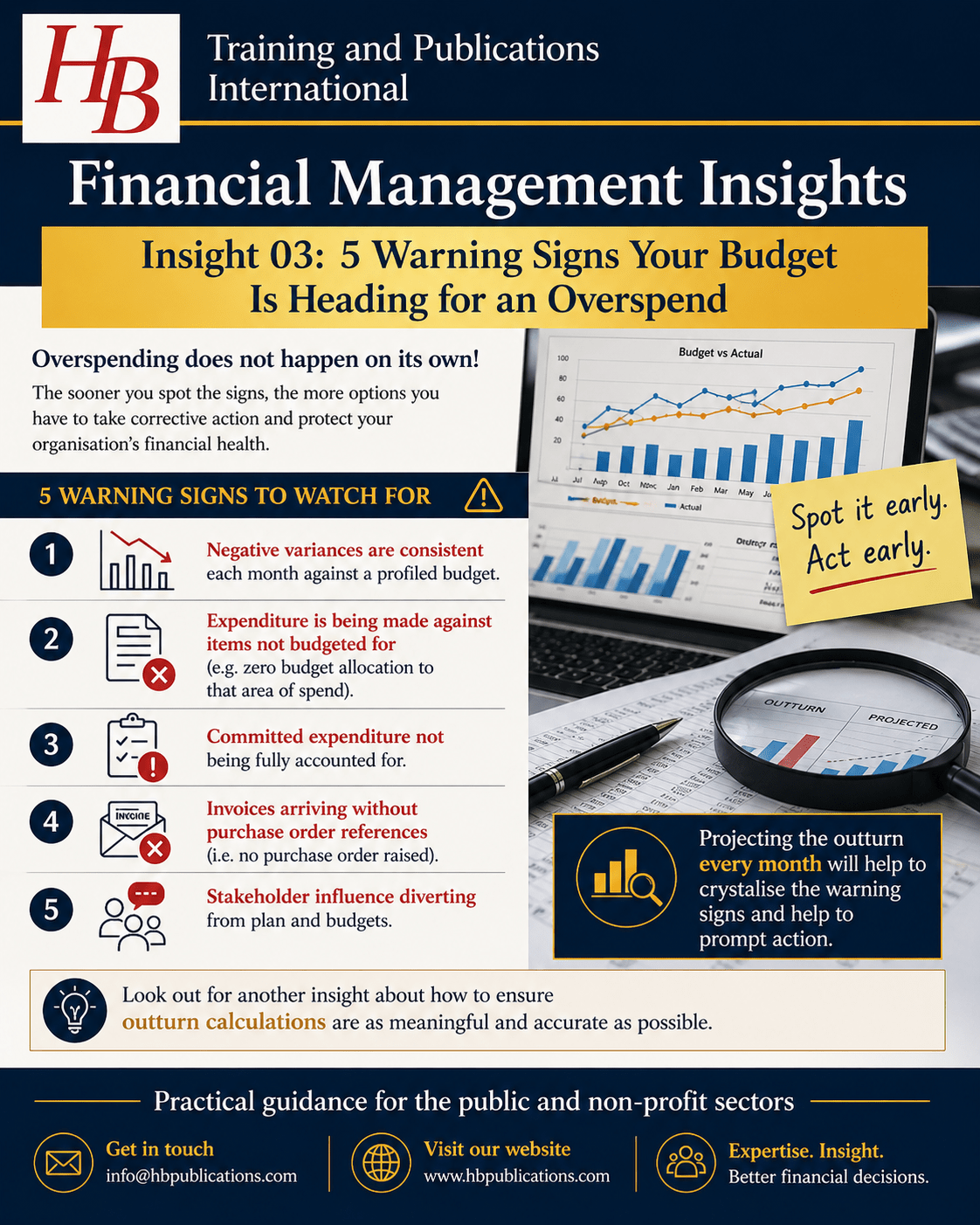
Overspending does not happen on its own!
Spending has a causal factor. Expenditure is created as a result of the organisation agreeing to pay for something, whether it be staff, products, services, contracts, etc. The expenditure takes place as a result of either a plan, or a need that needs to be fulfilled. The driving force may be demand, desire, or direction.
Regardless of the type of expenditure, revenue or capital; statutory or non-statutory; it is important to know when expenditure is going to exceed the budget, and by how much. The sooner this is known the more likely an organisation can take corrective or mitigation actions in the short term. In the longer term there may be a need for structural change or realignment of resources.
In order to assist in gaining this foresight, we identify 5 warning signs your budget is heading for an overspend.
- Negative variances are consistent each month against a profiled budget
- Expenditure is being made against items not budgeted for (e.g. zero budget allocation to that area of spend)
- Committed expenditure not being fully accounted for
- Invoices arriving without purchase order references (i.e. no purchase order raised)
- Stakeholder influence diverting from plan and budgets
Projecting the outturn every month will help to crystalise the warning signs and help to prompt action.
All five areas and much more are covered in our training and publications.
Look out for another insight about how to ensure outturn calculations are as meaningful and accurate as possible.
Training all staff with budget responsibility is key to enabling warning signs to be noticed.
Managing the Devolved Budget is an easy read and provides even more insight.
#PublicSectorFinance #BudgetManagement #NonProfitFinance #FinancialLeadership #BudgetHolders

